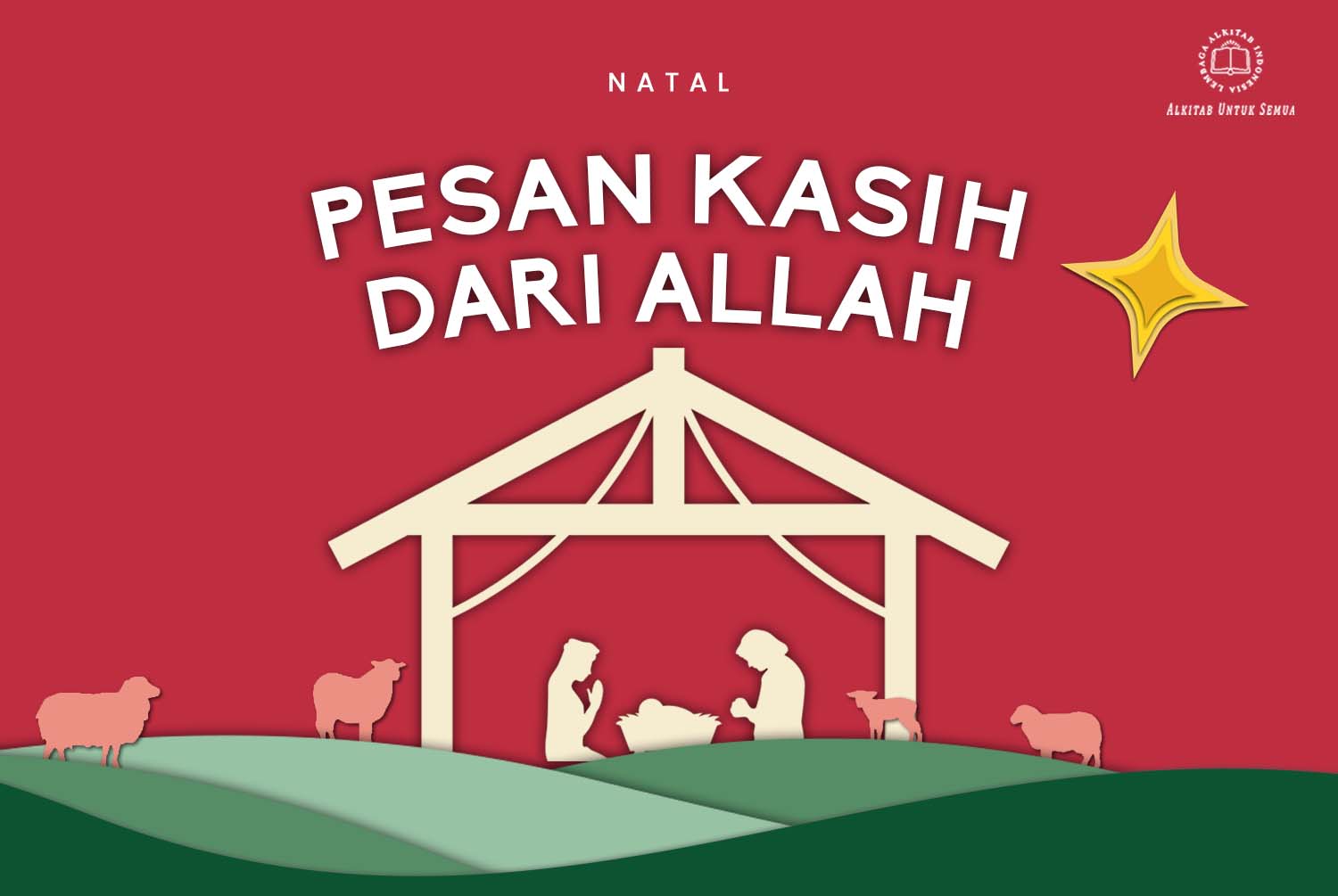
The excitement of Christmas is great. Even in Indonesia, the impression of a colorful and joyous Christmas is evident in the minds of those who are not Christian. Melodious and joyful songs are played everywhere. The warmth of family and the beauty of the holidays are imagined instantly. How joyous! But what if there is another dimension to Christmas. It is not only about joy, but also about the fervor ignited by God's message of liberation. The tyranny that undermines and oppresses humanity will soon be replaced by the power of the Just Creator. Those who are proud and rely on their power will be overturned by the Messiah. Meanwhile, those who have been oppressed and excluded will find a place in His Kingdom.
At least that message resonates loudly in the Gospel of Luke, which is so slick and imaginative when describing the series of stories about Jesus. Regarding the birth of Jesus, Luke takes a different perspective from Matthew. Luke tells the story of Zacharias and Elizabeth, the parents of John the Baptist. From Luke we know the story of the arrival of the angel Gabriel who made Mary pregnant, to the angel's announcement to the shepherds. In addition, we will always be reminded of the heartwarming wait of Simeon and Hannah.
In our reading, we see Luke's way of explaining the events before Jesus' birth. The holy family was forced to travel from Nazareth to Bethlehem, Joseph's home town. The reason for the family's “migration” was because Emperor Augustus issued an order for a worldwide census. This happened precisely when Cyrus was governor of Syria. The whole world referred to here is the entire massive Roman empire. At that time Rome was achieving great glory and prosperity, unfortunately achieved by repressing and oppressing the nations including the Jews.
News of the might of the Roman empire that could force the entire population of the “world” into mass mobility for a census, is juxtaposed with the proclamation of the birth of the Messiah to the first witnesses, the shepherds. Luke's choice is particularly interesting given that "shepherds" were often seen as a dishonest group of people who were outside the law. According to historical records, the Rabbis even excluded this group from the religious courts, because they were considered dishonest. They are the representation of wong cilik (the little people) or the socially, economically and politically weak. It seems that Luke wanted to make a subversive message from the very beginning of his Gospel that the Messiah is here for the marginalized and in favor of the socially, economically, and even spiritually poor.
The good news is delivered to the shepherds. Angels and heavenly hosts cried out to the shepherds, "Do not be afraid, for behold, I bring you good news of great joy for all the people: For there is born to you this day in the city of David a Savior, the Messiah the Lord (v. 11)." The announcement of the birth of the long-awaited Messiah was followed by praise to God by the heavenly host, "Glory to God in the highest, and on earth peace among men with whom He is well pleased.The last sentence is known in Latin as "Gloria in excelsis Deo et in terra pax hominibus bonae voluntatis." The angel's message confirms to us that the Messiah is present, He is the most powerful Lord (Yun: Kyrios, literally: Master). He alone brings eternal peace.
It is interesting to see that in Latin, the word translated as peace is Pax. The Roman Empire was reaching a period of peace and progress known as the Pax Romana or “Roman Peace” which was achieved after years of conquest, violence and occupation. The Emperor Augustus mentioned in Luke 2:1 was even known as “the peacemaker”, an altar was erected in his honor. Roman cities hailed him as the "savior of the whole world." This is where Luke cleverly delivers his message. He uses double irony, the savior of the world is not the emperor who achieved “peace” through violence, oppression, and colonization. The true savior is the Messiah who brings eternal peace through His presence in the world. He is both Lord and Master of the universe.
Isn't Luke's message what we really need to reflect on this Christmas Eve? Let's remember the condition of this nation and also various parts of the world that are torn apart by various economic, political and social instabilities. A handful of people arbitrarily misuse power and enrich their own groups. People in general are denied access to resources and are forced into poverty. Many people feel uneasy and the cry of protest goes up. What a relief it is to remember that we are not alone in our struggle for justice. The Messiah who was born thousands of years ago has declared His partiality for the poor, oppressed and marginalized. So He accompanies us in the struggle to call for justice. On the other hand, His presence also reminds us to continue to put our hope in God. His peace has been present, will be present, and always present. Bringing light to a world plagued by darkness.
Reflective questions:
In your opinion, how can we interpret the peace brought by Christ in the context of today's world?