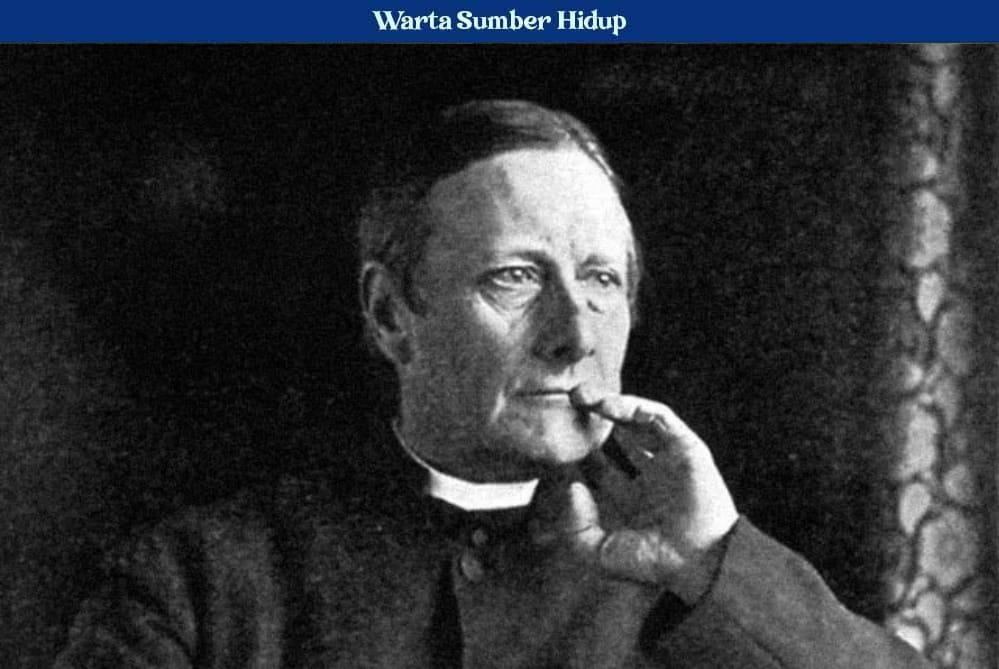
Bible Talk | Richo Kasih, M.Th., M.A.
When Christians refer to Jesus as "Messiah" or "Christ", we are actually using terms that were alive and well long before Christianity was born. The word "Messiah" comes from the Hebrew mā "scaron", meaning "anointed one", while its Greek equivalent is Christos. In the Christian faith, both terms are attached to Jesus: Jesus Christ.
But how exactly did the Jewish world of Jesus' time understand the anointed one? Were expectations of the Messiah uniform? Or were they diverse and dynamic? Through a shared reading of New Testament texts and some fragments of the Dead Sea Scrolls from Qumran, we are invited to take a broader look at the theological landscape behind Jesus' ministry.
The Messiah in the Old Testament: Anointed King and Priest
In the Old Testament, the term "anointed one" is primarily used in the context of kingship. In the Book of 2 Samuel 1:14, David refers to Saul as "the LORD's anointed." The anointing became a sign of divine legitimacy over the king who ruled in God's name. However, the term is not limited to kings. In the Book of Leviticus 4:3, the high priest is referred to as the "anointed priest" (hakōhēn hamāscaron;îaḥ). In this context, the anointing signifies both religious authority and faith responsibility: the high priest's sin impacts the entire people he represents.
Interestingly, in Isaiah 45:1, this term is applied to Cyrus, the Gentile king of Persia. The reference to Cyrus as "the anointed one" indicates that the anointing is not merely ethnic or nationalistic, but rather points to a historical role in God's plan of salvation. From the time of the exile, the meaning of messiah evolved from a mere office to an eschatological figure who was expected to bring great restoration to God's people.
Post-exilic Messianic Hope
After the Babylonian exile, the Jewish people lived in a stressful political and social situation. The hope of a Messiah became increasingly central to their faith tradition. This expectation was not singular. It developed in various forms: a Davidic king, an eschatological priest, a prophet like Moses or Elijah, even a heavenly figure bringing end-time liberation.
This is where the Dead Sea Scrolls, found at Qumran, make a significant contribution. Over 900 fragments found in eleven caves (later in 2017 a 12th cave was discovered, but sadly empty) reveal the richness and diversity of the theology of the Jewish community in the times leading up to and contemporaneous with Jesus.
The Dead Sea Scrolls, found at Qumran, are a significant contribution.
Messiahs in the Qumran Texts: Plural and Diverse
In community documents such as 1QS (Rule of the Community), there is an expectation of "prophets and messiahs from the descendants of Aaron and Israel." This expression indicates an expectation of more than one messianic figure: a priestly messiah and a kingly messiah. This tradition reflects the plurality of expectations in Second Temple period Judaism.
In text 11Q13 (often called 11QMelchizedek), the figure of Melchizedek is depicted as an eschatological figure who sets captives free and judges the powers of evil. The interpretation of Isaiah 52:7 in this text connects the good news with an anointed figure who has a cosmic role.
Fragment 4Q246 even mentions a figure who will be called "Son of God" and "Son of the Most High," with an everlasting kingdom and a just reign. These titles, often associated with New Testament Christology, were already circulating in Jewish discourse before Christianity was born.
In 4Q521, the Messiah is described as having power over creation: heaven and earth are subject to him. He sets captives free, makes the blind see, heals the wounded, even raises the dead and preaches good news to the poor. Interestingly, some of these elements are not explicitly present in Isaiah's text, but rather are interpretative developments that come closer to the time of Jesus.
Paul and Christ: Confessions of Faith in Messianic Language
In Paul's letters, the title Christ is closely attached to the identity of Jesus. In 1 Thessalonians 1:10, Jesus is referred to as his Son who saves from the wrath to come. In Romans 3:21-26, Paul speaks of "Jesus Christ" and "Christ Jesus" as the way of reconciliation and the embodiment of God's righteousness. Paul associates Jesus with the fulfilment of prophecy and Israel's eschatological hope.
The Gospels and the Variety of Perceptions of the Messiah
The Gospel of Mark opens its narrative with the bold theological declaration, "This is the beginning of the gospel of Jesus Christ, the Son of God." Yet within the narrative itself there is public confusion about the identity of Jesus. In Mark 6:14-16 and 8:27-33, Jesus is mistaken for John the Baptist, Elijah, or one of the prophets. Peter's confession that Jesus is the Messiah is immediately followed by Peter's rejection of the prophecy of the Messiah's suffering. This shows that the concept of a suffering Messiah does not automatically conform to common expectations.
The story of Jesus calming the storm (Mark 4:35-41) demonstrates authority over nature, a feature that resonates with the 4Q521 image. Similarly Jesus' reading of Isaiah 61 in the Gospel of Luke 4:16-21, when he declares that the prophecy was fulfilled in himself, has strong resonance with the Qumran tradition of a liberating and healing Messiah.
The story of Jesus calming the storm (Mark 4:35-41) demonstrates authority over nature, a feature that resonates with the 4Q521 image.
Conflicts of Authority and Accusations of Blasphemy
The high priest's question in Mark 14:60-65, "Are you the Messiah, the Son of the Blessed One?", suggests that the title is not a foreign concept. Yet Jesus' response associating Himself with the figure of the Son of Man seated at the right hand of the Almighty sparked accusations of blasphemy.
Most likely, the main issue was not simply a messianic claim, but an implication of authority that shook the religious structure of Jerusalem (cf. Mark 11:27-33). Here we see that Jesus' conflict with the religious authorities was closely related to claims of divine power and legitimacy.
The Plurality of Messianic Expectations and its Implications
A comparison between the New Testament and the Qumran Manuscripts confirms that Judaism at the time of Jesus was not monolithic. There were diverse groups with different messianic expectations: Messiahs of priestly descent, Messiahs of royal descent, even a prophet like Elijah. In this context, the confession of faith that Jesus is the Messiah is not an idea that arose suddenly or independently of previous traditions. Rather, it proclaims that in Jesus, the diverse expectations about the Messiah that had long been alive in the faith of Israel found their convergence and fulfilment, albeit in ways that went beyond common expectations, especially through the path of suffering and the cross.
Closing
The question "Messiah before Christians?" helps us realise that faith in Jesus was not born in a vacuum. It is rooted in Israel's rich and dynamic history and faith tradition. The Qumran texts help us see how wide and varied the expectations of the time were.