In late 2025 and early 2026, Indonesians were shocked by the massive flash floods that devastated several areas in Sumatra. Various parties tried to analyse the cause of such a massive disaster. Apparently the root of the problem is the conversion of land and forests into production crops, be it trees for the production of paper or palm oil. Forests and soils that provide natural protection from rainwater due to their durability and water absorption capacity are depleting year by year. Water eventually moves freely in a natural and uncontrolled manner. Casualties have fallen and material losses continue to creep up. Sumatra has not fully recovered even today. Based on these analyses, our journalists bravely changed the naming of the disaster. What happened in Sumatra is not just a matter of natural disaster, but an ecological disaster. A disaster because of the ecological damage that occurred. Many parties were blindfolded, although our government initially processed the data by denying it, but in the end they accepted the bitter reality as a disaster due to ecological damage.
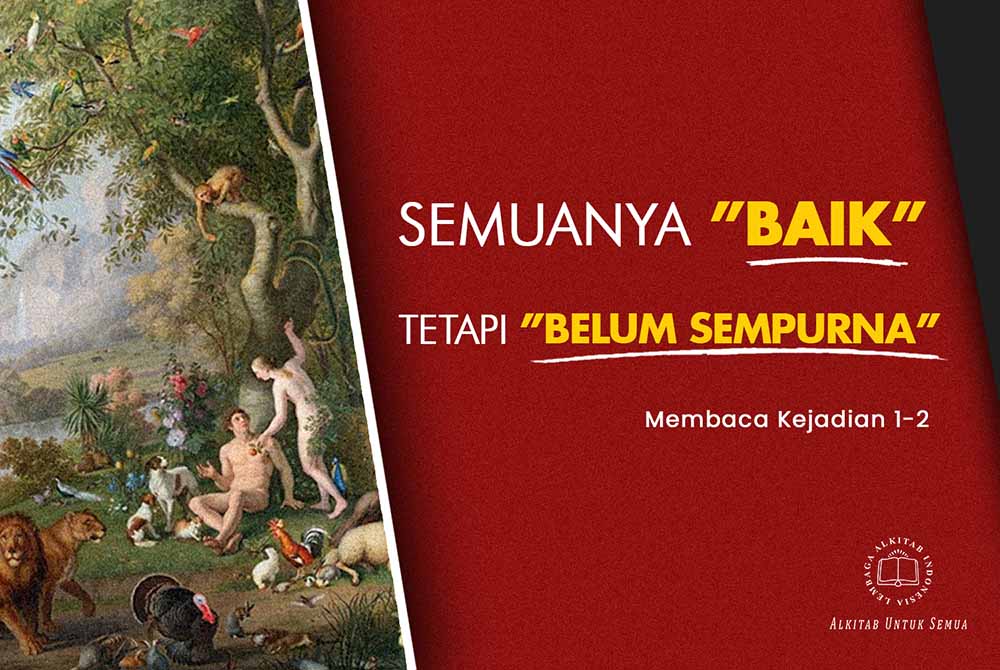
As believers who live in the conviction of faith as God's mandate over the stewardship of His creation. So Christians are invited to give a real answer to the phenomena that occur. Do we realise that the ecological damage has occurred because of human greed that was born out of human sins? According to Genesis 1:31, God actually created the world with love and viewed all of His creation "very good." However, because of sin, the very good creation was slowly swallowed up by human greed. The peaceful nature became corrupted. A constructive and contextual understanding of faith needs to be formed to respond to this phenomenon. One of them is by re-interpreting the resurrection of Christ as an act of God's love that not only restores humanity from sin but the entire creation. The Apostle Paul wrote, "God has reconciled all things to Himself through the blood of Christ on the cross" (Colossians 1:20). So, Easter is good news for all creatures — for the wounded earth, the dirty air, the polluted water, and the entire creation that longs for renewal.
The resurrection of Christ is the beginning of a new creation. The stone of the tomb being rolled away is a sign that the power of sin and death has been defeated, and new life is beginning. The apostle Paul called Christ the "firstborn from the dead" (1 Corinthians 15:20), meaning that Christ's resurrection is the beginning of the resurrection of the entire creation. The old world is being renewed into a new world. Since Easter, God has been working to reorganise His creation: restoring relationships, healing wounds, and growing life. Therefore, believers are invited to be part of this work of renewal: to be bearers of life, not destroyers of life.
The Gospel of Matthew 28:1-10 tells the story well. It highlights the role of women as the first witnesses of Christ's resurrection. Women, who at that time were not even considered as convincing witnesses in court, are given a place to give the most important news in history: "He is risen!" This gives us a very broad interpretation that the resurrection of Christ brings a new order, that which was considered weak is now restored and honoured. The women came to the tomb with loving hearts, wanting to care for Jesus' body even though it seemed all was over. Their loyalty and care symbolised a new life born out of love, not power. Thus, women signify the beginning of the resurrection itself: new life arises from love, faithfulness, and the courage to care even in the midst of darkness.
Then the news that "He is risen" is not just spiritual news of Christ's victory over death. His resurrection confirms that all life on earth has a new hope. Through His resurrection God recreates life from chaos to order. When Jesus died, the world seemed to go back into darkness: the disciples were frightened, hope was extinguished, and life stopped. However, on Easter morning, the light of God pierced the darkness. The empty tomb signalled the beginning of a new creation. The old world ruled by sin and death began to be renewed by the power of God's love. Resurrection brings a new order, not in the sense of restoring things to the way they were, but rather creating a new order in which love, hope and life lead. In the context of ecology, this means that the resurrection calls us to help reorganise a broken world into a home fit for all creation, under the light of the risen Christ.
The destruction of nature has indeed happened but through the resurrection of Christ, we stand in the belief that there is still hope for the restoration and care of His creation. Just as our sin has been washed away by the blood of Christ, so too should human greed be washed away in His love. So the space for restoration of self and the universe continues to be wide open. Jesus rose in the morning at the break of dawn. Together with the sun that gives life to the universe, so Christ also reveals His restoration for all life.
Reflective question: What concrete role do we want to play in the context of His restoration of creation?