Knowing History and Its Contents
The New Testament is found in the second half of the Bible. This twenty-seven book section continues the story of God's people that began in the Old Testament. The term "covenant" itself comes from the Greek diatheke which means "agreement" or "will". The Old Testament tells the story of the covenant that God made with the people of Israel. This covenant is largely summarised in the Law. Those who obeyed God and lived according to the law would become God's people. However, about six hundred years before the birth of Jesus, the prophet Jeremiah had prophesied a "new covenant", a covenant based on an inner relationship between man and God (Jer. 31:31-34). The New Testament writers used the phrase "new covenant" to describe the things God did through Jesus (1 Cor. 8:7-13, 9:15-17, 11:25, 12:24-27). The apostle Paul said that this new covenant is not based on a written law, but is born of the Spirit of God and brings new life (2 Cor. 3:6-15; Gal. 3:10-14).
The books of the New Testament were written in the hundred-year period following the life of Jesus. They mostly focus on Jesus of Nazareth, a Jew who Christians see as the Anointed One (“Messiah”) or Saviour (Mrk. 8:29, 14:61-62; Luk. 2:11; John. 20:30-31; Kis. 3:18-21). The Gospels (Matthew, Mark, Luke, and John) each present the life journey and teachings of Jesus from their own perspective. The Acts of the Apostles tells the story of the apostles who, after his resurrection, carried the news of Jesus and spread his message. The New Testament epistles show a wide variety of preaching and interpretations of Jesus' teachings that took place during the time of the early church. This happened along with the preaching of the good news to the Gentiles. From the New Testament letters, we can also learn about the experiences and lives of the early Christians. The closing section of Revelation, the last book of the New Testament, describes a hopeful future in which God will create a new heaven and a new earth.
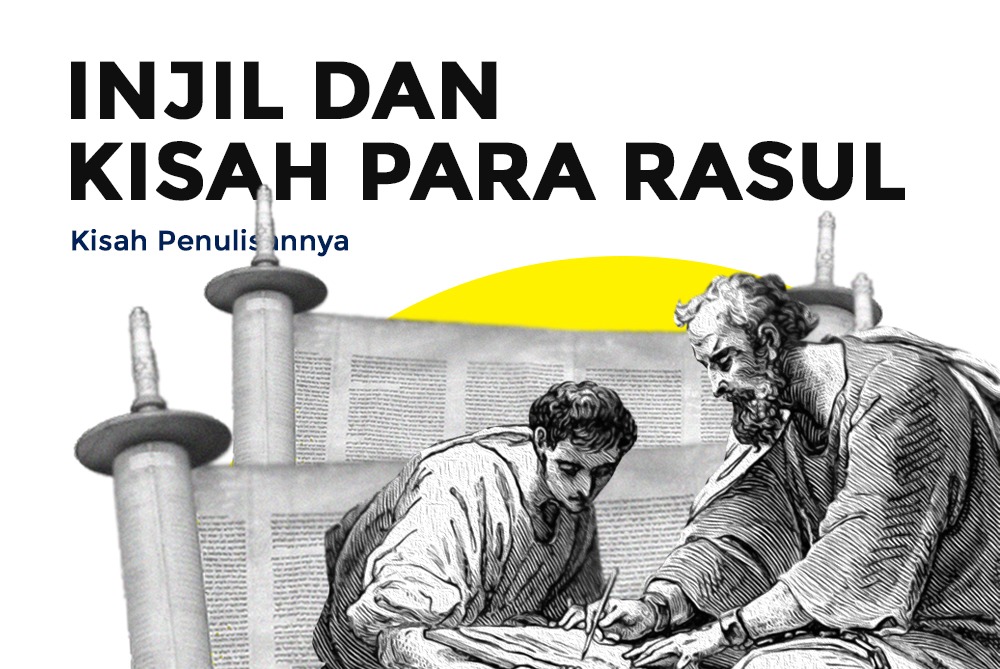
The authorship of these New Testament books cannot be precisely determined. However, most scholars now think that some of Paul's letters are the oldest. The Gospels and Acts were written later. Mark, which is probably the oldest gospel, was probably written sometime after Rome destroyed Jerusalem in 70.
Although Jesus and his disciples spoke Aramaic, the New Testament books were written in colloquial Greek from the beginning. The New Testament writers were familiar with the Greek translation of the Old Testament (the Septuagint), as a number of quotations in the New Testament are taken from the Septuagint, although some were translated into Greek from the Hebrew Old Testament. The original New Testament manuscripts are in fragments or have long since perished. However, handwritten copies of the texts are still available as they have always been handed down. The oldest copy of the entire Greek New Testament dates back to the 4th century, while the oldest fragment of a New Testament book dates back to around 125. In addition, the first translations of the New Testament in Coptic, Syriac and Latin are also of great value. It took more than 300 years for there to be twenty-seven accepted books in today's New Testament.
Source: Study Edition Bible