The heart has reasons that reason cannot comprehend
(Pensees/Thoughts)
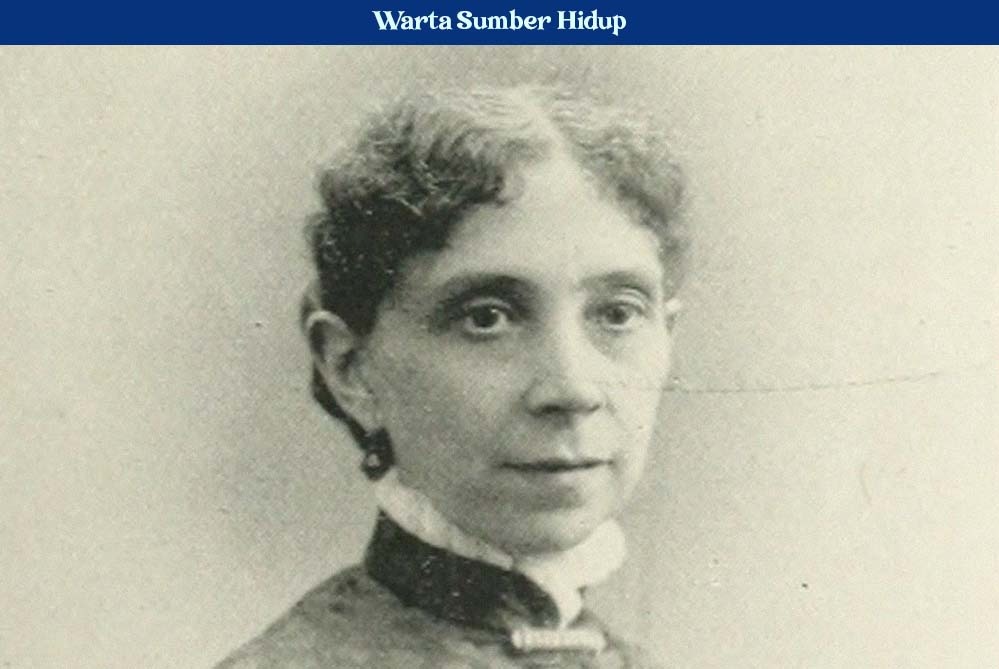
It is extremely rare in the history of human civilisation for a figure to emerge who is capable of leaving a profound mark across multiple fields simultaneously. Blaise Pascal (1623–1662) was one of those rare thinkers. He may be described as a child prodigy, a revolutionary mathematician, an experimental physicist, a pioneer of computer science, a consummate writer, as well as a Christian apologist and a devout mystic.
In his relatively short life—he passed away at the age of 39—Pascal produced works that not only transformed the landscape of modern science, but also offered the most profound reflections on human existence and the soul’s relationship with the Creator.
Blaise (pronounced: Blese) Pascal was born on 19 June 1623 in Clermont-Ferrand, France. He was the third child of Étienne Pascal, a government official and amateur mathematician, and Antoinette Begon. After his mother died when Blaise was just three years old, Étienne decided to move his family to Paris and educate his children at home.
Étienne adopted an unusual educational approach: he forbade Blaise from studying mathematics before the age of 15 so that the boy could focus on Latin and Greek. However, Blaise Pascal’s natural genius could not be contained. Raised in a family of book lovers, Pascal enjoyed self-directed learning. At the age of 12, in secret, Blaise proved for himself the 32nd proposition of Book I of Euclid that the sum of the angles in a triangle is equal to two right angles.( Euclid was a mathematician from Ancient Greece who lived in the city of Alexandria, Egypt, around 300 BC. He was very famous and was known as Father of Geometry for his great contribution to summarising and systematically organising the science of geometry. Witnessing the extraordinary genius of his son, his father finally relented and presented him with a copy of Elements by Euclid to Blaise.
Thus, by the age of 12, Pascal had mastered all the theorems of mathematics and physics. At the age of 16, he discovered new theorems which, to this day, are of great use to various fields of science, ranging from medicine to astronautics.
At the age of 18, he fell seriously ill. Behind the brilliance of his scientific genius, Pascal’s life was constantly overshadowed by physical suffering. From a young age, he suffered from severe abdominal pain, intense migraines and partial paralysis. However, it was this physical suffering that would later become the breeding ground for his spiritual reflections.
At the age of 19 (1642), moved by compassion at the sight of his father, who was exhausted from recounting tax records, Pascal designed and built the world’s first practically functioning mechanical calculator, which was later named Pascaline. This device was capable of performing addition and subtraction mechanically using toothed wheels, and marked the beginning of the history of modern computing.
At the age of 21, he invented the barometer (an instrument for measuring atmospheric pressure), the hydraulic pump and the syringe. At the age of 24, he sought a foundation for his faith. At the age of 35, he was paralysed. At the age of 39, he passed away.
Blaise Pascal was indeed unique. Throughout his life he felt restless. He was restless in the face of the mysteries of mathematics and physics. For that reason, he sought and continued to seek. Then he discovered. He was also restless in the face of the mysteries of faith. For that reason, he sought and continued to seek. Then he too found his answer.
Pascal’s life was filled with achievements. However, gradually he began to reflect. What is the meaning of human life? He wrote: “When I contemplate the brevity of life, swallowed up by eternity both before I existed and after I have gone … I am filled with awe and wonder as to why I am living now, and not before or after. Who has placed me here and now?"
Pascal questioned what the true purpose of life actually is. Is the purpose of life to seek God? Pascal wrote: “It is impossible for God to be the end if He is not also the beginning.” The search for faith begins with accepting faith. Faith is given by God.
Pascal then began to delve into the theology of Augustine and the Apostle Paul. As his father had taught him Latin and Greek from a young age, he was able to study many theological works on his own. Pascal recorded all his anxieties and struggles of faith in loose notes. It was only after Pascal’s death that these notes were collected by his friends and published in 1670 as a book entitled Pensées(Thoughts).
In Pensé, Pascal describes human beings as creatures caught between two extreme abysses: infinity (infinity) and nothingness (nothingness). Human beings are walking contradictions: they possess grandeur (grandeur) because they are capable of thought, yet at the same time they are afflicted by (misère) due to their vulnerability, sinfulness and subjection to death.
He wrote: “Man is but a blade of grass … but he is a blade of grass with a brain.” A man’s worth lies in his brain … so let us use our brains for good things.” Pascal then admitted: “The brain is a gift from God. Therefore, it must be used in obedience to God. Not using one’s brain is a sin; yet using one’s brain without obeying God is also a sin.” Pascal went on to write: “The heart also has its own mind … it is the heart that senses the presence of God. That is where faith lies …”
Still on the subject of the relationship between the mind and the heart, Pascal echoes Paul’s statement that Christ’s act on the cross is regarded as folly by the mind, but is in fact strength according to the judgement of the heart. Pascal writes: “Whoever knows God without knowing their own sin, does not glorify God but only glorifies himself. The world did not come to know God through its wisdom; therefore, God was pleased to save those who believe through the folly of the preachingof the Gospel. (1 Corinthians 1:21).”
Later, as his illness grew worse, Pascal wrote extensively about his suffering. His notes read: “Yes, my Saviour, may the pains I feel invite You to visit me … It is in the marks of Your suffering that You recognise those who are Your disciples. Recognise me once more as Your disciple in the suffering I am currently enduring … Unite my will to Yours. Unite my suffering with Your suffering … Let it no longer be I who live and suffer, but You who live and suffer within me, who take only a small part in all Your suffering.”
Pascal’s illness was increasingly taking its toll on his body and soul. Often he could not take a step, for he frequently saw an abyss before him, and even beneath his feet. His father had long since passed away, his elder sister was married and lived far away, so Pascal’s life is supported by his friends and by his younger sister, Jacqueline, who has become a nun.
On 19 August 1662, Pascal said, “May Christ not forsake me,” and then he passed away.
In the folds of the coat Pascal was wearing that day, a crumpled piece of paper was found containing his notes, which had been kept for eight years: “Monday 23 November 1654, from approximately 10.30 pm to 12.30 am ... The God of Abraham, the God of Isaac, the God of Jacob. Not the God of philosophers and scholars. Certainty. Awareness. Joy. Peace. The God of Jesus Christ. Your God shall be my God … may I never again be separated from Him … Sweet and complete self-denial.”
Blaise Pascal is living proof that high-level intellectualism and sincere faith need not be mutually exclusive. Indeed, at the height of his rational genius, Pascal recognised the limitations of human logic and the importance of surrendering oneself to Divine grace. He wrote in Pensées:”The final step of reason is to acknowledge that there are still an infinite number of things beyond its reach. Reason is weak if it fails to realise this.”
As a physicist and mathematician, he laid the foundations of modern science; as a spiritual thinker, he offered solace and guidance to the soul—a soul thirsting for ultimate truth. Pascal left us with an enduring legacy: that reason is a noble gift for understanding the world, but it is the heart that enables humanity to know God.
Pascal, the discoverer, found Christ during his short life. Or, more accurately: that genius discoverer was found by Christ.