Bridging Faith and Diaspora: GIII Japan and LAI Sign Cooperation Agreement
That afternoon, the meeting room of the Indonesian Bible Society (LAI) was not just a place for institutional business. It became a space for cross-border encounters—between Indonesia and Japan, between the diaspora church and the Bible ministry, between a long history of faith and hopes for a broader future of ministry.
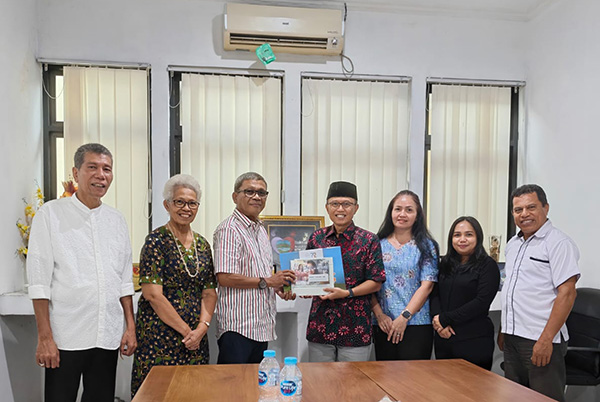
In a warm and friendly atmosphere, the Central Council of the Indonesian Interdenominational Evangelical Church (GIII) Japan and the Indonesian Bible Society officially signed a Cooperation Agreement (KKS) as a form of joint commitment to expand the ministry of God's word, especially for Indonesian Christians and areas where access to the Bible is still limited.
This agreement did not come about overnight. It grew out of the long history of GIII Japan's ministry, which began in 1989 when Indonesian Christians in Tokyo felt the urge to worship regularly in their native language. From a simple fellowship in a congregation member's home to the first service on August 27, 1989, in Shinjuku, led by Rev. Yasuo Atsumi, the church continued to grow until it was officially named the Indonesian Interdenominational Evangelical Church (GIII) in 1998. Since 2003, it has been legally under the Japan Evangelical Church.
Today, this historical legacy is linked to the mission of LAI, which has served Indonesia for more than seven decades. In his speech, Rev. Ayub Abner M. Mbuilima, Chairman of the Central Church Council of GIII Japan, emphasized that this cooperation is rooted in a vision that transcends institutional interests.

“This partnership is not centered on us, but on expanding the Kingdom of God. We long to join hands with LAI to reach 3T areas,” he said with confidence.
He also added his hope that the GIII Japan congregation would be able to see the tangible fruits of their participation. “When the Bible is distributed, we hope there will be a sign that this is the result of the support of the GIII congregation. It is important for the congregation to know that what they have given has truly reached its destination,” he said.
On behalf of LAI, Dr. Sigit Triyono, General Secretary of LAI, welcomed this collaboration as part of the common calling of churches across nations. He emphasized that the Bible has a strong unifying power amid denominational and cultural diversity.
“Whatever church we belong to, we use the same Bible. That is what unites us,” he said.
Sigit also explained the various challenges of Bible ministry in Indonesia—from the needs in remote areas, literacy programs for people who cannot read, to the translation of the Bible into hundreds of regional languages. All of that, according to him, cannot be done alone. “We have one mission: to bring the Bible closer and reach those who do not know it,” he said.
The meeting took on a deeper meaning when Japanese GIII pastors shared stories of their ministry among the diaspora. Rev. Yustinus Hia described the challenges of preaching the gospel in Japanese culture, which highly values privacy. “It is not easy to witness about our faith in the workplace, but that is precisely where we see the courage of the congregation to continue professing their faith,” he said.
The signing of the KKS then became a symbolic moment that affirmed their shared commitment. It was not just an administrative document, but a sign of readiness to walk together—uniting resources, prayers, and ministry for the sake of God's word reaching more people.
This commitment did not stop at the signing of the cooperation document. In the spirit of sharing real love, GIII Japan also expressed its concrete support through a financial contribution of Rp 168,076,233 for the One in Love Program initiated by the Indonesian Bible Society. This support is a manifestation of the concern of the Indonesian diaspora congregation in Japan for their fellow believers in their homeland, especially those who still have limited access to the Bible.
Through the One in Love Program, GIII Japan takes part in ministry that transcends geographical distance and differences in life contexts. This offering of love stems from the awareness that the body of Christ is one—that the joys and struggles of God's people in the remote corners of the archipelago are also part of the prayers and ministry of the diaspora church. It is in this fellowship that the word of God continues to be presented as a strengthening of faith, hope, and a sign of God's love working through His people.
The meeting closed with a joint prayer, asking that this cooperation truly become an instrument of God, not only for the people in Indonesia, but also for the Indonesian diaspora in Japan. From Tokyo to the corners of the archipelago, from small worship spaces to 3T areas, God's word is expected to continue to find its way—to be lived, understood, and lived out.