Jakarta, May 14, 2024 - The Indonesian Bible Institute (LAI) held a Group Discussion (FGD) to discuss the Medium-Term Strategic Plan 2025-2029. In this FGD, LAI opened itself to receive suggestions from institutions, churches, partners, and pastors who are close to the lives of the congregation.
The process of developing the Medium-Term Plan (MTP) involved two sub-teams tasked with identifying the aspirations of LAI's stakeholders and assessing internal and external factors and future trends. Information gathering through questionnaires and FGDs was also conducted, coupled with a SWOT analysis of each department in LAI.
"Hopefully, in July, the plan will be finalized.
"Hopefully, in July 2024 there will be a compilation of data, and then in August and September will give birth to the draft of LAI's RJM 2025-2029," said Dr. Sigit Triyono, General Secretary of LAI, who attended the meeting on behalf of the LAI Board.
Three main challenges were identified.
The three main challenges identified are aspects of institutional sustainability, in terms of finances, human resources, competence, and adaptation; competition from other institutions that also translate the Bible; and technological changes, including the presence of the New Translation of the Bible, 2nd edition (TB-2) in digital format.
As a publishing institution as well as an ecclesiastical institution, LAI realizes the importance of involving stakeholders, especially Christians, in its ministry planning. The questionnaire shows that LAI has not fully reached all generations through digital services, although this is a necessity.
LAI realizes the importance of reaching out to all generations through digital services.
LAI recognizes the importance of reaching out to the younger generation, especially the Z and Alpha generations, in its efforts to disseminate the Bible. The discussion forum identified the younger generation's need for engaging text, image, video, and animation content.
"They need text, images, videos, and animations.
"They need text, images, videos, and animations. If possible, LAI should play a role in providing such content," said Herald Siagian, who was present representing the UKI Foundation. The responsibility for nurturing and mentoring the younger generation, according to Herald, is not only on the shoulders of LAI, but the role of parents is also considered crucial in mentoring the younger generation.
Parents are expected to teach and mentor the younger generation.
This effort is considered important considering the challenges faced by LAI in reaching the younger generation in today's digital era. With a special strategy and collaboration with various parties, LAI hopes to maintain the continuity of the spread of the Bible among the next generation.
LAI has been known for its Bible translation work in Indonesia. However, in the midst of the urgent need to provide the Bible in the various regional languages of which there are few speakers, there is a push for LAI to open itself up to a more flexible and collaborative bargaining position with other translation agencies, including NGOs with foreign sponsorship.
The forum also highlighted the need for LAI to open itself up to more flexible and collaborative bargaining positions with other translation agencies, including NGOs with foreign sponsorship.
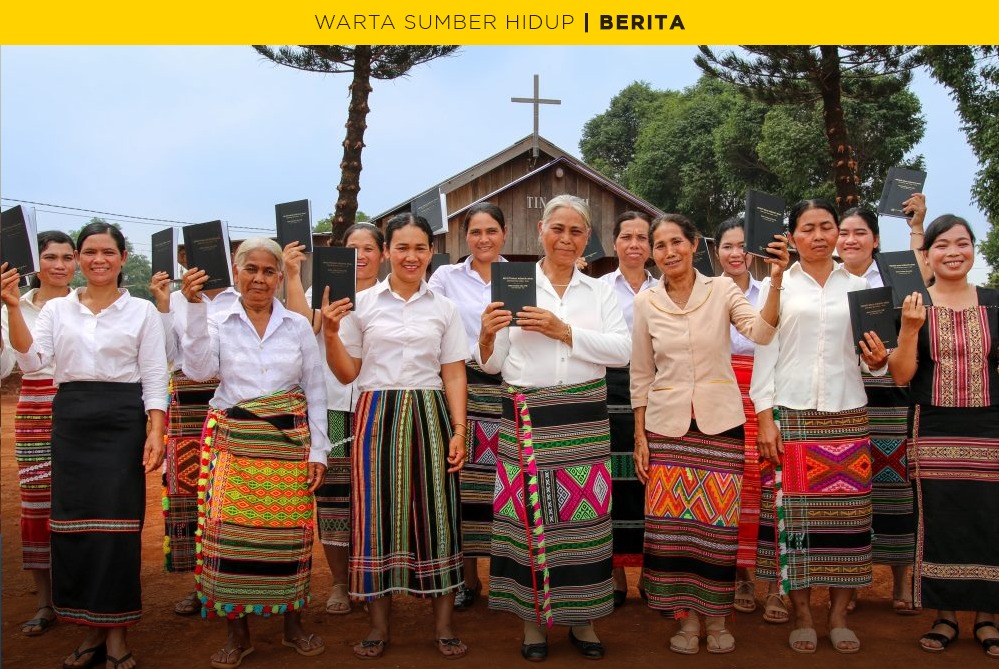
The forum also highlighted how tribes with small numbers of speakers are often overlooked in Bible translation efforts. With limited resources, to date LAI has managed to translate the complete Bible into 37 local languages. However, this number is still far from the needs that exist. Therefore, many expect the LAI to play a more collaborative role in Bible translation initiatives in Indonesia.
The Forum also proposed that the LAI take on the role of coordinator or facilitator of Bible translation. By sharing work areas with other translation agencies, the translation process can be accelerated. "LAI does not need to go north, south, or east," said Rev. Dr. Irwan Widjaja, representing the GBI synod. "It is enough for LAI to be a facilitator, then this can be faster than the current work."
Many NGOs are ready to collaborate and support this effort with the help of foreign sponsors. Thus, the translation of the Bible into regional languages where there are few speakers can be more affordable and done more efficiently. This step is expected to accelerate the availability of the Bible in languages that more Indonesians can understand.
By adopting this collaborative approach, LAI not only strengthens its bargaining position, but also addresses the spiritual needs of tribes that have been marginalized. Hopefully, with good synergy between LAI and other translation agencies, the vision of providing the Bible in all regional languages in Indonesia can be realized soon. (pp)