Whether we realise it or not, the digital world has become an integral part of human life. The digital world makes everything faster, easier and more accessible. Opportunities to develop ideas, creativity and knowledge are also wide open in this era. However, this does not mean there are no negative impacts that could threaten our lives if we use it incorrectly.
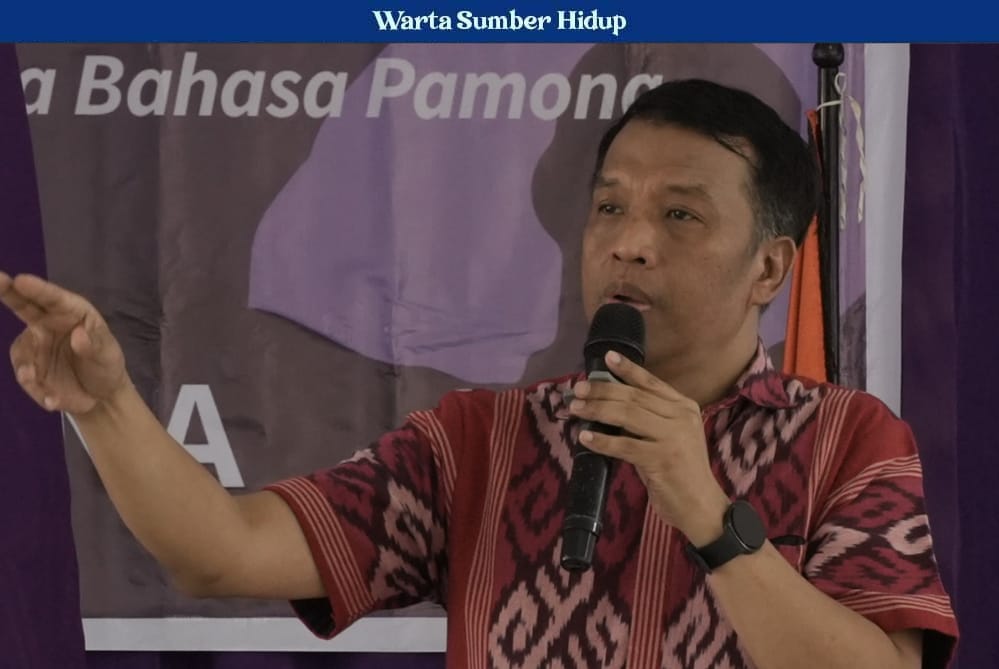
As part of the ongoing Bible Week activities taking place in Tentena, North Sulawesi, the Indonesian Bible Society (LAI), specifically its Department of Digital Development and Services, is once again organising a Digital Literacy Workshop on the theme “Becoming Christ-Fluencer to Tell His Tale”, featuring a Content Creator who also serves in the Digital Ministry at GKI Coyudan Solo, Reggy Leo. Reggy shared his insights on the importance of upholding wise values when using social media so that it can bring about positive benefits. “The digital world does not just exist on the screen; it must have an impact on our lives,” said Reggy.
Furthermore, he went on to introduce the four pillars of digital literacy, summarised in the simple acronym C-A-B-E:
• Digital literacy: The ability to understand digital technology wisely
• Security: Safeguarding privacy and protecting personal data against threats and harmful actions
• Culture: Good manners must be observed when using social media
• Ethics: Good and bad behaviour that forms the basis of responsibility when interacting with others and regarding any content shared.
Reggy also called on this younger generation to ‘reincarnate’ in the same way that Christ came down as a human being to bring transformation to the world. As children of God, our presence on social media is hoped to not merely be passive, but to bring about transformation, have an impact and bring change to the world through content that blesses others. One way to do this is by utilising Artificial Intelligence (AI). Content created using AI is indeed proliferating rapidly; however, caution is required when using AI technology, as AI is built with a specific purpose in mind and, if misused, can lead one astray into AI-generated illusions.
To address these concerns, LAI has developed an AI-based application called the Interactive Bible (ALIN). Anything related to the Bible can be asked of ALIN. Using ALIN, participants—who had already been divided into their respective groups—were challenged to create a one-minute video. Ideas for the script can be expressed in a ‘conversation’ with ALIN, which is then transformed into an engaging story in the form of a short video.
The participants appeared very enthusiastic about making videos, despite the very limited time available. At the end of the session, the three best videos, as selected by the judges – Reggy, Joseph and Zegy (representatives from LAI’s Digital Department) – were announced for each group. See you at the next Digital Literacy event in the next city! [zvp]